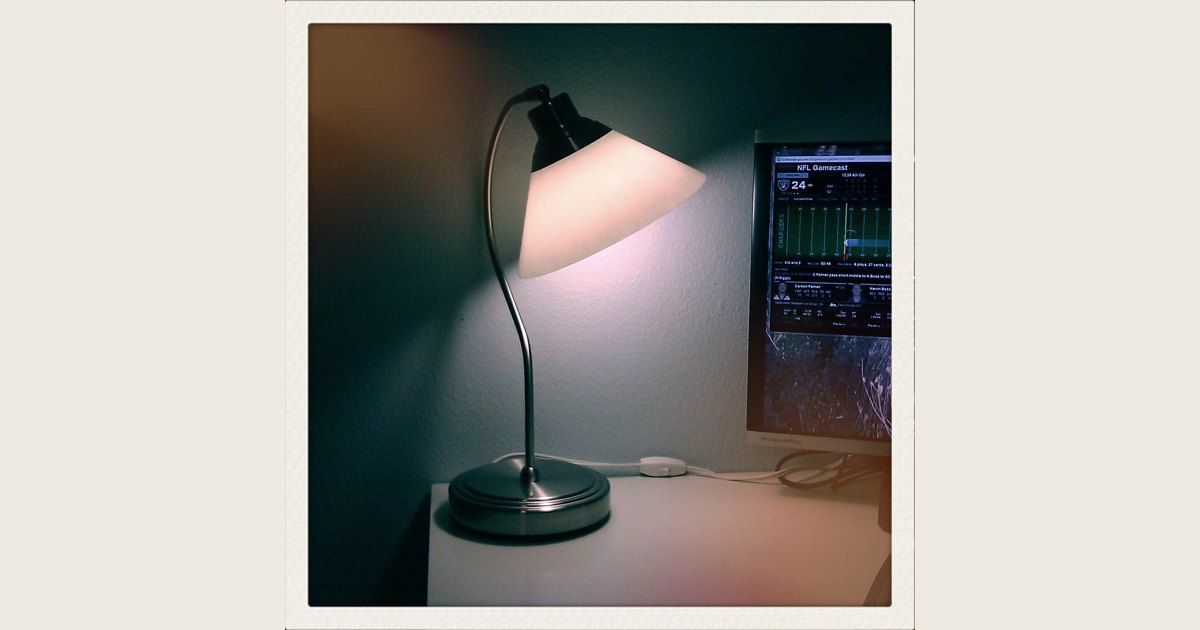
A modern table lamp is a style choice and a light source; those are separate decisions. First decide whether you want an accent, ambient light, or light directed toward a particular area. Then check the lamp’s dimensions, the maker’s bulb and control instructions, and where its cord and switch will sit. “Modern” does not tell you how bright a lamp is or which bulbs it accepts.
This guide focuses on decorative table lamps for a home office, not dedicated task lamps. A style label alone does not establish a lamp’s brightness or suitability for close work; check the maker’s intended-use guidance for the exact model.
Key takeaways
- Pick the lamp’s job before choosing its shape.
- Check dimensions and cord/switch placement against your real desk layout.
- Follow the fixture’s bulb limits and compatibility guidance.
What makes a table lamp feel modern?
Modern table lamps come in many shapes: a slim stem, rounded globe, sculptural base, or pared-back shade. Treat “modern” as a style cue, then judge function and dimensions separately. A finish can echo or contrast with your furniture; whether that feels right is a matter of the room and your taste.
Before shopping, complete this sentence: “I want this lamp to ___.” For example, add a focal point to a side table or put a separate pool of light beside the desk. A clear purpose helps you rule out attractive models that would occupy useful space without meeting your need.
Compare common shapes and their trade-offs
Think about how a lamp may fit the room rather than treating a silhouette as universally best. Shade material, bulb position, and dimensions vary by model.
| Form | What it can do well | Check before choosing |
|---|---|---|
| Globe or rounded shade | Adds a soft, sculptural focal point and can suit a clean-lined room. | Is the bulb visible from your chair? Does the globe occupy too much visual or physical space? |
| Opaque dome or cone | Has a defined, often streamlined outline. | What light direction and use does the maker specify for this model? |
| Fabric or translucent shade | Adds visible texture and a softer material contrast. | Does the product description explain how the shade is intended to be used? |
| Slim stem or compact base | Leaves more of a small tabletop available. | Is the base stable, and does the shade still have enough clearance from a wall, shelf, or monitor? |
A lamp can contrast with straight desk edges or echo shapes already in the room. Compare its finish with nearby furniture instead of matching everything exactly. One standout color or material may feel intentional; several competing shapes can make a crowded desk feel busier.
Size and placement: measure before you buy
Fit the lamp to the table and your seated view. Check its listed base diameter, total height, and shade width; product photos can hide scale, so mark those dimensions on your desk with paper or painter’s tape. Then sit where you normally work and check shade clearance and whether a visible source would be in your line of sight.
Reserve your keyboard, notebook, mouse, and other daily essentials before allocating space to an ambient lamp. Account for shelves, walls, and monitor edges, and choose a control you can reach without moving work items. CPSC advises routing lamp cords out of walking paths; avoid a route that pulls the cord taut across the desk, too. (CPSC checklist)
On a narrow desk, base size may matter more than shade width. A larger lamp can suit a side table if it doesn’t crowd other objects or block the view. There is no single height ratio for every desk: table, chair, shade, and sightline all affect the fit.
Example: If your desk has room for a lamp only beside the monitor, tape out the listed base size first. Check the shade against the monitor and shelf, then confirm that you can reach its switch and that its cord reaches an outlet without crossing a walking path. If one check fails, consider a smaller base or a nearby side table rather than squeezing it into the work zone.
Choose a shade and finish that suit the room
Treat the shade shape as a cue to inspect, not proof of how a room or work surface will be lit. From your usual chair, check whether the source is exposed or falls in your sightline. If product images don’t make that clear, ask the seller for another view. For light direction or task use, rely on the maker’s description for that model, not labels such as globe or dome.
Materials shape the impression: metal can look crisp, glass reflective, and fabric soft. These visual cues don’t guarantee durability or light quality. Check care instructions for delicate finishes and review return terms if color or texture needs to coordinate closely.
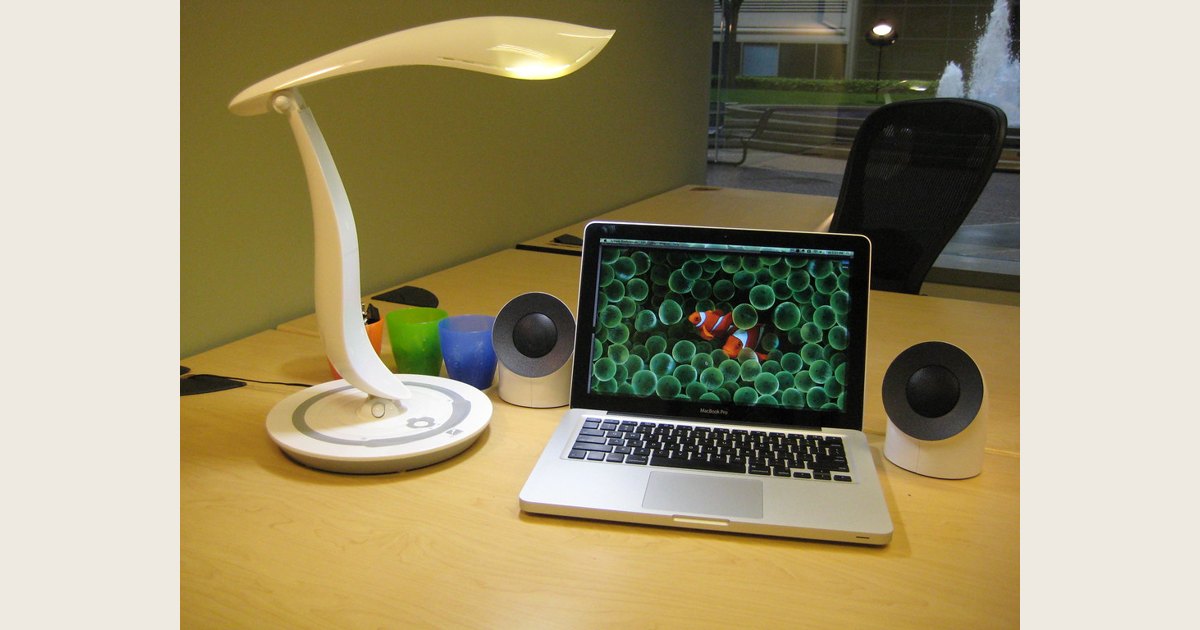
The lamp’s curved head draws a line over the desk, while its round base occupies a distinct patch of tabletop. Compare both the shape and footprint with the space you need to keep clear.
Photo: “Apple Macbook Pro, Lacie Neil Poulton Speakers, IMG Lighting Desk Lamp” by imglighting, licensed under CC BY 2.0. Resized and padded. Illustrative stock photo; no product testing is implied.
Read the bulb and fixture specifications
Check the lamp listing and instructions for bulb type, maximum wattage, and light-source requirements. CPSC advises using bulbs within the fixture’s recommended wattage to avoid overheating. (CPSC, Home Electrical Safety Checklist)
Use the information the maker provides:
- Bulb fit and wattage: Confirm the bulb type and wattage limit for this fixture. CPSC warns that a higher-than-recommended bulb may overheat a fixture, wiring, or nearby combustible materials. (CPSC, Home Electrical Safety Checklist)
- Dimming and controls: If dimming matters, confirm that the specific lamp, bulb, and dimmer are compatible. Review the maker’s operating instructions rather than guessing from a touch control or socket fit.
- Light source: Some LED fixtures have permanent built-in sources or specially designed replaceable sources. Check the maker’s replacement or service information before buying. (ENERGY STAR, “Learn About LED Lighting”)
- Light direction: A light-output figure alone doesn’t show how much light reaches the desk. LEDs are directional, and fixture design affects where light goes; check the maker’s description for the exact lamp. (ENERGY STAR)
When comparing two lamps that fit your desk, check their dimensions, permitted bulb type and wattage, and controls before choosing by shape. If a key detail is missing, ask the seller rather than guessing.
Match the lamp to your office layout
The best spot depends on what else shares the surface. Place an ambient desk lamp where its base won’t take over the writing or mouse area. If you use an adjustable task lamp, put the table lamp to the side or on a nearby cabinet for a separate pool of light. Keep their roles distinct rather than expecting a decorative model to do both jobs.
In a bedroom or living room office, choose a lamp that suits the space when work is done. A sculptural shape can act as decor; a restrained one can recede beside a monitor. In tight corners, check shade clearance and cord access. In shared spaces, make sure the switch is reachable without disturbing someone nearby.
A practical pre-purchase checklist
Before you place an order, confirm these points on the product page or with the seller:
- The lamp’s dimensions fit the space you marked out.
- Its purpose—ambient, accent, or supplementary directed light—matches the way you plan to use it.
- The shade and bulb aren’t likely to sit in an unwanted sightline.
- You know the supported bulb type, limits, and how the controls work.
- The switch is reachable, and the cord can reach the outlet along a clear route.
- The finish, care needs, warranty, and return policy work for your room and budget.
If scale is unclear, compare the listed dimensions with an object you own or ask the seller for missing measurements. For a built-in light source, check the maker’s replacement or service details instead of assuming it can be changed like a standard bulb.
For the electrical basics that apply to a lamp, the CPSC’s Home Electrical Safety Checklist says to use a bulb within the fixture’s recommended wattage and keep lamp cords out of walking paths. It also advises replacing damaged cords or equipment. This is general household guidance, not a substitute for the instructions supplied with a particular lamp.
Frequently asked questions
Can a modern table lamp provide task lighting?
It depends on the particular fixture and how you position it. Look for manufacturer information about light direction and intended use; a style label alone does not show whether it suits close work. A directional LED, for example, does not necessarily spread light around the room like an all-direction source. (ENERGY STAR)
What should I check on a lamp listing?
Confirm its dimensions, specified bulb and wattage limit, control operation, and how a built-in source is serviced. If cord length or clearance is missing, ask the seller rather than guessing.
The bottom line
Choose by task and fit, then verify the lamp’s specifications. Measure the tabletop and shade clearance, decide whether you need a replaceable bulb or built-in light source, and follow the maker’s instructions for the bulb and controls. For a narrow desk, a compact base may leave more usable surface; for a side table, a larger silhouette may make sense if it doesn’t obstruct the space. These are trade-offs to compare, not universal sizing rules.
Featured image: “New Desk Lamp” by brendan-c, licensed under CC BY 2.0. Resized and padded. Illustrative stock photo; no product testing is implied.