
If you want to try a chair before committing, start at a local office-furniture showroom and ask to sit in the exact model. If you already know the model, compare its manufacturer site with reputable furniture or office-supply retailers. For a lower-cost or hard-to-find chair, look at a refurbisher or used seller—but inspect the condition and confirm the return and warranty terms first.
Featured image credit: Rashed Hossain’s photo of an open office, via WordPress Photos, CC0 1.0; resized and padded. Illustrative stock image; it does not depict a chair tested or offered for sale here.
Key Takeaways
- Shop in person when testing fit matters; shop online when you know the model and can verify the seller’s terms.
- Compare the delivered, assembled cost—not just the price shown beside the chair.
- Before buying used or refurbished, check the exact model, condition, return window and written warranty.
- A short showroom sit can screen out a poor fit, but it cannot guarantee all-day comfort.
Where can you buy an office chair?
The main options are office-furniture showrooms, manufacturer websites, furniture and office-supply retailers, commercial refurbishers, and private resale listings. Start with whether you need to try a chair, have a model in mind, or will accept more uncertainty to buy used.
| Where to shop | A good fit if you… | Check before paying |
|---|---|---|
| Office-furniture showroom | Want to compare adjustments in person | Is this the exact model and configuration? What is the delivered price? |
| Manufacturer website or locator | Have chosen a brand or model | Who sells and ships it? What warranty and return terms apply to this purchase? |
| Furniture or office-supply retailer | Want to compare brands or pickup options | Who is the seller, and is this model available at the location? |
| Commercial refurbisher | Want a used chair with its condition described | What work was done, and what coverage is in writing? |
| Private used listing | Can inspect and collect the chair | Can you verify the model and test its adjustments before paying? |
For concrete starting points, Herman Miller’s U.S. Where to Buy page lists its online store, other online retailers, authorized retailers, dealers, and showrooms. Steelcase’s authorized-dealer page has a dealer finder for the Americas/English market and links to supported markets. These are examples, not endorsements or guarantees that a nearby seller has a particular chair in stock; confirm the location, exact model, and configuration before traveling. For a local refurbisher, search for “used office furniture” plus your city, then call to ask which chairs are on the floor and whether you can inspect them.
Is it worth trying an office chair in a store?
A showroom is useful when you are unsure about seat dimensions, armrests, back height or controls. Try the adjustments you expect to use and check whether your feet can rest comfortably on the floor, the seat edge leaves room behind your knees, and the armrests fit under or around your desk. Bring your desk height and workspace measurements, or note them on your phone.
Ask whether the displayed chair is the same size and configuration as the one you would order. A product family may have different seat sizes, bases or optional features. If the store does not have the exact chair, ask whether its return terms let you evaluate the delivered model at home. A brief test is only a first screen: it cannot reproduce a full workday or promise the chair will suit you over time.
Before leaving, get the complete price in writing. Ask whether delivery includes carrying the box to your room, assembly, packaging removal or taking away an old chair. These services may be separate or unavailable, so do not assume a showroom’s advertised price includes them. Once you have a chair, our guide to adjusting an office chair can help you set it up for your workspace.
Should you buy a chair online from a brand or retailer?
Online shopping can make it easier to compare the same model across sellers, but a product page alone does not tell you how a chair feels or how difficult it may be to return. Check the model number and configuration, who is selling and shipping it, the estimated ship date, delivery method, assembly requirements and the complete return policy before placing an order.
Do not treat “free shipping” as “free returns.” Check the return deadline, whether the chair must be boxed in its original packaging, who pays return freight, whether pickup is available, and whether a restocking fee applies. Look for exclusions that might apply after assembly or use. Save the product page, policy, order confirmation and any delivery estimate; policies and listings can change.
If a listing is from a marketplace, identify the third-party seller and read that seller’s terms rather than assuming the marketplace or brand handles every part of the transaction. Check the promised ship date and what the seller says to do if the chair arrives late, damaged or different from the listing. Save the listing and order confirmation so you can refer to the terms shown when you bought it.
What should you check when buying used or refurbished?
Used and refurbished are not interchangeable descriptions. A private seller may simply be reselling a chair as-is; a refurbisher may have inspected or replaced parts, but the word “refurbished” by itself does not tell you what work was done. Ask for the exact make, model and age if known, a clear explanation of repairs, and written return and warranty terms. Ask the manufacturer whether any original coverage applies to that chair and buyer rather than assuming it transfers.
For a local sale, inspect the chair before paying. Raise and lower the seat, test the recline and lock, turn the chair, and roll it on a suitable surface. Look for a cracked base, loose arms, damaged casters, torn mesh or fabric, uneven movement, and a seat that no longer holds its height. Check the underside label so you can match the chair to the seller’s description. If the seller will not let you test it or cannot identify the model, factor that uncertainty into your decision—or walk away.
A hands-on inspection can reveal visible wear or a malfunction, but it cannot establish the chair’s full history or guarantee its remaining life. If you buy it, identify the upholstery and follow its care directions; see our guide to cleaning an office chair.
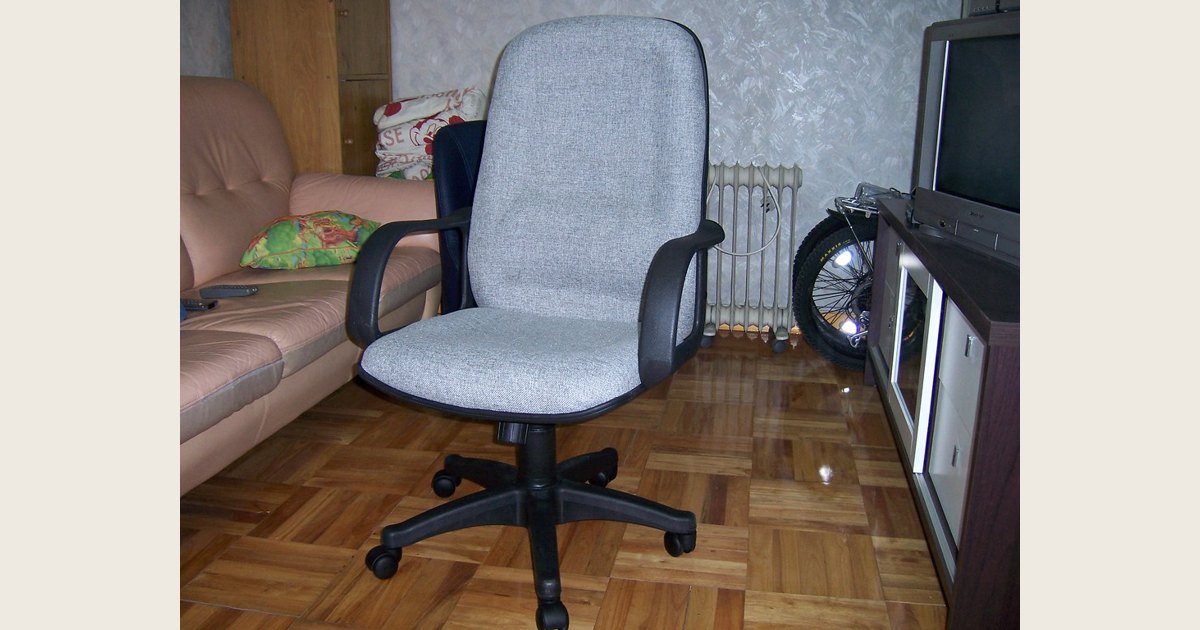
When inspecting a used chair, look over the visible base, casters, armrests and upholstery, then test the adjustments and movement yourself; this illustrative stock image is not a product listing or inspection. Photo: “Office Chair” by Kansir, via Openverse, CC BY 2.0; resized and padded.
How do you compare the real cost and return risk?
Compare the total cost of getting a usable chair into your workspace, not just the item price. Add taxes and delivery, then check whether assembly, stairs or room-of-choice delivery cost extra. If you may return it, include possible return shipping, pickup and restocking costs in your decision. For a used chair, include the time and cost of collecting it, cleaning it or replacing a worn part. These costs differ by seller, location and chair, so request a written quote for your address.
A retailer’s policy is an example, not an industry standard. For instance, IKEA’s U.S. return page says new, unopened products may be returned within 365 days and open products within 180 days with proof of purchase. It excludes items that are modified, dirty, stained or damaged and requires a receipt and valid government-issued photo ID. Read the full IKEA return policy and confirm it applies to the particular chair and purchase. Do not assume another store offers the same window or accepts a large assembled item by mail.
Before ordering, read the written warranty too. Check the coverage period, covered parts, exclusions, claim process, and whether labor or shipping is your responsibility. Save the warranty and receipt with the product listing and order confirmation. For a used or third-party sale, ask the seller or manufacturer—in writing—whether coverage applies to that exact chair and to you.
A five-minute checklist before you buy
Use this list in a store, on a product page or when inspecting a used chair:
- Match the chair to your space. Check seat dimensions, height range, armrest clearance and the space available under your desk. Verify that the listing describes the size and options you intend to order.
- Try or verify the adjustments. In person, test seat height, recline and armrests. Online, use the manufacturer’s specifications and confirm what is included; do not rely on a photo to identify a configuration.
- Confirm who is responsible. Note the seller, shipper, customer-service contact and warranty provider. For third-party listings, read the named seller’s terms.
- Calculate delivered and return costs. Get delivery and assembly details for your address. Check return deadlines, condition rules, packaging, freight, pickup and restocking charges.
- Keep the paperwork. Save the listing, policy, receipt, warranty, model number and messages. For used chairs, record the condition and any repair promises before paying.
If an online chair arrives damaged or differs from the listing, photograph the box and chair before assembly, keep the packing material, and contact the seller through its official support channel. Ask what remedy is available and keep the response. If you cannot resolve an online-purchase complaint with the seller, USAGov explains where to seek further help, including state consumer-protection offices; its guidance distinguishes those complaints from scams and suspicious communications.
So, where should you buy?
Choose a showroom if you need to sit in a chair before deciding. Choose a brand or established retailer online if you know the exact model and have checked delivery, returns and warranty terms. Choose a refurbisher or private seller only after confirming the chair’s identity, condition and coverage—and understand what happens if it does not work for you.
The safest comparison is not “online versus in-store”; it is fit, seller, total cost and recourse. Compare those four points before you pay, and save the terms that applied to your order.